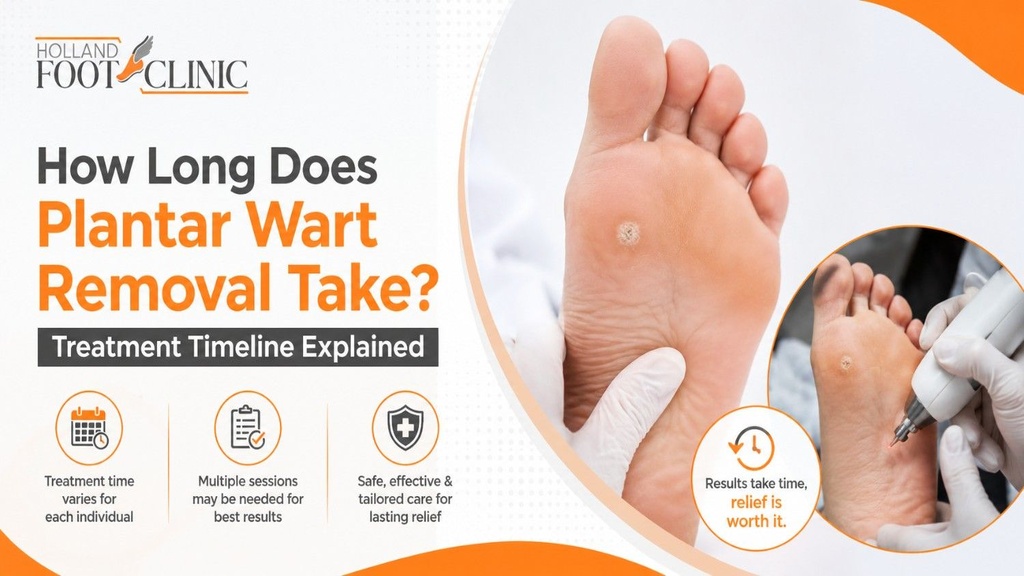
Plantar wart removal can take anywhere from a few weeks to several months, depending on the size, depth, location, your immune response, and the treatment method used. While some small warts respond after one or two treatments, stubborn or multiple plantar warts often require ongoing care. Early diagnosis and professional treatment generally lead to faster, more effective results and reduce the risk of recurrence. If you’re also dealing with fungal nail infections, seeking the best plantar wart removal treatment alongside expert foot care can help keep your feet healthy and comfortable.
Introduction
If you’ve recently discovered a painful bump on the sole of your foot, one of the first questions you’re probably asking is, “How long will it take to get rid of it?”
It’s a fair question. Plantar warts can make everyday activities like walking, exercising, or standing for long periods uncomfortable. While some eventually disappear on their own, many persist for months or even years without treatment.
The good news is that modern podiatry offers several safe and effective treatment options for plantar wart removal. However, there’s no one-size-fits-all timeline.
Every plantar wart is different, and the time needed for complete removal depends on several factors, including the size of the wart, how long you’ve had it, and the treatment approach used.
In this guide, we’ll explain what affects the healing process, what to expect during treatment, and how you can improve your chances of a faster recovery.
What Is a Plantar Wart?
A plantar wart is a small skin growth that develops on the bottom of the foot after infection with certain strains of the human papillomavirus (HPV). The virus usually enters through tiny cuts or breaks in the skin, particularly in warm, moist environments such as public pools, gyms, and communal showers.
Unlike warts that appear elsewhere on the body, plantar warts grow inward because of the pressure placed on the soles of your feet. This often makes them more painful, especially when walking or standing.
Common symptoms include:
- A rough, thickened area of skin on the sole
- Pain when standing or walking
- Tiny black dots (clotted blood vessels)
- A lesion that interrupts the skin’s natural lines
- Tenderness when pressure is applied from the sides
Typical Plantar Wart Treatment Timeline
Although every case is unique, most patients can expect treatment to follow a general timeline.
1. Initial Consultation
Your first appointment focuses on confirming the diagnosis. A podiatrist will examine the lesion to ensure it is a plantar wart rather than another condition such as a corn, callus, or other skin lesion.
Once diagnosed, a personalised treatment plan is created based on the wart’s size, location, and severity.
2. First Few Weeks
Treatment usually begins immediately.
Depending on the chosen method, the wart may gradually shrink as infected tissue is removed or the body’s immune system is stimulated to fight the virus.
Patients often notice reduced discomfort before the wart disappears completely.
3. Four to Eight Weeks
Many smaller plantar warts show significant improvement within this period when treated consistently.
Larger or longstanding warts may still require additional appointments, but healthy skin often begins replacing the affected tissue.
4. Two to Six Months
Stubborn plantar warts may require treatment over several months, particularly if multiple lesions are present or the wart extends deeper into the skin.
Regular follow-up appointments help monitor progress and adjust treatment where necessary.
Why Does Plantar Wart Removal Treatment Time Vary?
Many patients are surprised to learn that there isn’t a fixed timeline for plantar wart removal.
That’s because every wart responds differently to treatment.
Several factors influence how quickly it resolves.
- Size and Depth of the Wart
Small, newly developed plantar warts are generally easier to treat than large or deeply embedded lesions. Warts that have been present for months often require multiple treatment sessions because the virus has become established in deeper layers of skin.
- Number of Warts
A single wart usually responds faster than a cluster of warts, commonly called a mosaic wart. Multiple lesions often require a more comprehensive treatment plan and closer monitoring.
- Your Immune System
Your immune system plays a major role in eliminating the virus. Individuals with a healthy immune response often experience quicker healing, while those with weakened immunity may require longer treatment.
- Previous Treatments
Warts that have already been treated unsuccessfully with over-the-counter products or home remedies can sometimes become more resistant, making professional treatment even more important.
What Are Plantar Wart Removal Treatment Options?
Professional treatment is usually more effective than attempting to remove plantar warts at home.
Depending on your condition, your podiatrist may recommend one or more of the following approaches.
- Debridement
Carefully removing thickened skin helps reduce pressure and allows other treatments to penetrate more effectively.
- Topical Medications
Prescription-strength treatments gradually destroy infected skin while encouraging healthy tissue growth.
- Cryotherapy
Cryotherapy freezes the wart using liquid nitrogen. Several treatment sessions are often required, with appointments typically spaced a few weeks apart.
- Needling Therapy
For persistent plantar warts, needling may stimulate the immune system to recognise and eliminate the virus more effectively.
- Other Advanced Treatments
Depending on the severity of your condition, your podiatrist may discuss additional evidence-based treatment options tailored to your needs.
What Can You Do to Speed Up Recovery?
Although no treatment can guarantee instant results, following your podiatrist’s advice can improve healing and reduce the risk of recurrence.
Some helpful tips include:
- Attend all scheduled follow-up appointments.
- Keep your feet clean and dry.
- Avoid picking or cutting the wart yourself.
- Wear supportive footwear to reduce pressure.
- Cover the wart in shared public areas.
- Follow all aftercare instructions carefully.
Consistent care often leads to better long-term outcomes.
When Should You See a Podiatrist?
Many people delay treatment, hoping the wart will disappear naturally.
However, professional assessment is recommended if:
- The wart becomes increasingly painful.
- Walking or exercise becomes difficult.
- Home treatments haven’t worked.
- The wart spreads to other areas.
- You have diabetes or poor circulation.
- You’re unsure whether the lesion is actually a wart.
Early plantar wart removal treatment often means shorter recovery times and a lower chance of the virus spreading.
Looking After Your Overall Foot Health
Plantar warts aren’t the only condition that can affect your feet. Nail fungal infections, cracked heels, corns, and other skin conditions are also common and can impact comfort and mobility if left untreated.
Seeking professional podiatry care allows multiple foot concerns to be assessed during the same visit.
If you’re experiencing discoloured, thickened, or brittle toenails, your podiatrist can also recommend the best nail fungus treatment based on the severity of the infection, helping restore healthier nails while improving your overall foot health.
Why Choose Holland Foot Clinic?
At Holland Foot Clinic, we believe effective foot care begins with an accurate diagnosis and a personalised treatment plan.
Our experienced podiatrists provide evidence-based care for plantar warts, fungal nail infections, and a wide range of foot conditions using modern treatment techniques tailored to each patient’s needs.
We focus not only on relieving symptoms but also on identifying underlying causes, reducing recurrence, and helping you return to comfortable daily activities with confidence.
Healthy Feet Start with Early Treatment
Plantar wart removal isn’t an overnight process, but with the right treatment and professional guidance, most patients achieve excellent results. Understanding the treatment timeline helps set realistic expectations and encourages consistent care throughout the healing journey.
If your plantar wart is causing discomfort or isn’t responding to home treatments, seeking professional podiatry care can help you recover sooner and prevent further complications.
Book an appointment with Holland Foot Clinic today and take the first step towards healthier, pain-free feet.
FAQs
How long does it usually take to remove a plantar wart?
Most plantar warts require several weeks to a few months of treatment. Small warts may respond within 4 to 8 weeks, while larger or stubborn warts can take several months, depending on the treatment method and your immune response.
Can a plantar wart disappear without treatment?
Yes. Some plantar warts eventually disappear as the immune system clears the virus. However, this may take months or even years, and the wart can become larger, more painful, or spread to other areas during that time.
Is plantar wart removal painful?
Most professional treatments involve minimal discomfort. Some procedures may cause temporary tenderness during or after treatment, but your podiatrist will explain what to expect and recommend appropriate aftercare to keep you comfortable.
Can plantar warts come back after treatment?
Yes. Because plantar warts are caused by HPV, recurrence is possible if the virus remains in the surrounding skin or you’re exposed again. Following aftercare instructions and maintaining good foot hygiene can help reduce the risk of recurrence.
When should I seek professional treatment for a plantar wart?
You should see a podiatrist if the wart is painful, continues to grow, spreads, interferes with walking, or hasn’t improved with home treatment. People with diabetes, poor circulation, or weakened immune systems should always seek professional assessment rather than attempting self-treatment.
Can a podiatrist treat both plantar warts and fungal nail infections?
Yes. Podiatrists diagnose and treat a wide range of foot conditions, including plantar warts and fungal nail infections. If you’re concerned about persistent nail changes, they can recommend the best nail fungus treatment based on your individual condition while addressing any other foot health concerns during the same visit.