Yellow, thickened, brittle, or crumbly toenails are common signs of onychomycosis, a fungal nail infection that affects millions of people worldwide.
While over-the-counter (OTC) antifungal treatments are widely available, choosing the best nail fungus treatment can be confusing, and not every infection responds to self-treatment alone.
The effectiveness of an OTC treatment depends on how advanced the infection is, how much of the nail is involved, and whether the fungus has spread beneath the nail plate.
Understanding these factors can help you choose the most appropriate treatment and know when professional care is needed.
Can Over-the-Counter Treatments Cure Nail Fungus?
OTC antifungal treatments can be effective for mild fungal nail infections, particularly when the infection is detected early and affects only a small portion of the nail.
These products generally work by slowing or stopping fungal growth while the healthy nail gradually replaces the infected section. However, because toenails are thick and grow slowly, results take time and require consistent application.
If the infection has caused significant nail thickening, involves multiple nails, or has reached the nail matrix, OTC products alone are less likely to provide complete resolution.
Common Over-the-Counter Anti-Fungal Ingredients
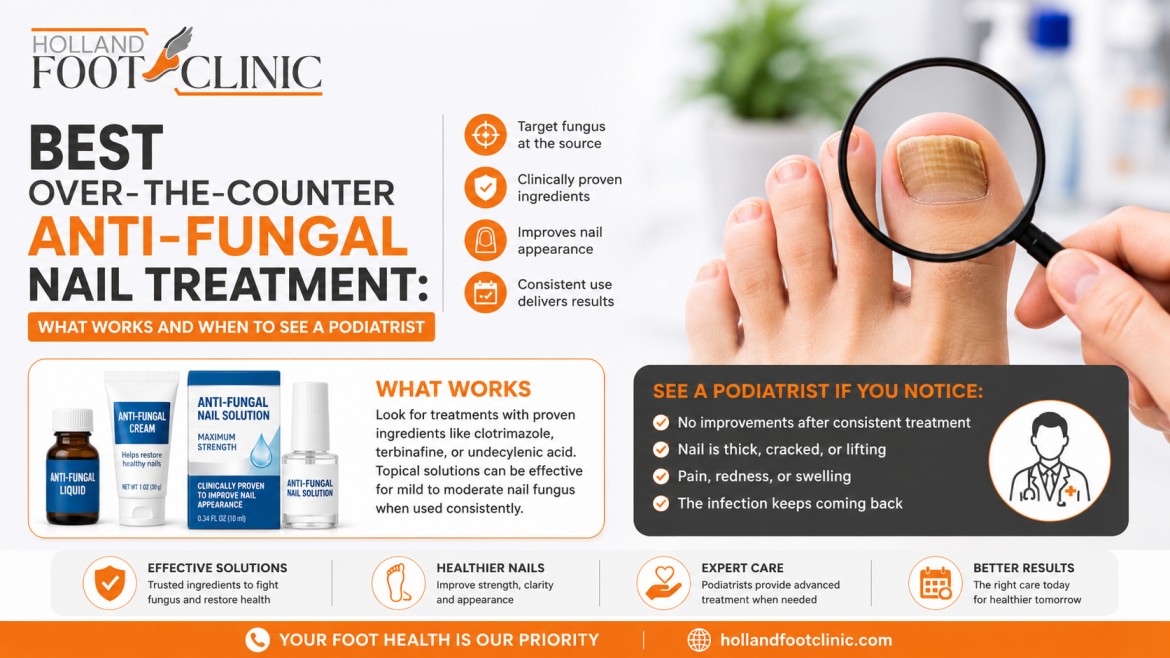
Several antifungal ingredients are commonly found in non-prescription nail treatments. While formulations vary, they are designed to target fungal organisms on or around the nail.
Some commonly used antifungal ingredients include:
- Tolnaftate: Often used to help manage superficial fungal infections.
- Undecylenic Acid: A topical antifungal ingredient commonly found in OTC solutions for fungal skin and nail conditions.
- Clotrimazole: Frequently used for fungal skin infections and may be recommended when athlete’s foot is present alongside nail fungus.
- Terbinafine Cream: While topical terbinafine is effective for fungal skin infections, creams generally have limited penetration through the nail plate compared to treatments designed specifically for nails.
Prescription-only treatments such as ciclopirox, efinaconazole, and amorolfine may be recommended in certain cases depending on your location and healthcare provider.
Ready to Start Your Treatment? Book your consultation today and get a personalized plan.
☎ (289) 290-3668When Are OTC Nail Fungus Treatments Most Effective?
Over-the-counter treatments generally achieve the best results when:
- The infection affects less than half of the nail.
- Only one or two nails are involved.
- The nail has minimal thickening.
- The infection is identified early.
- The product is applied consistently as directed.
- Good foot hygiene is maintained throughout treatment.
Toenails grow slowly, so even with successful treatment, visible improvement may take several months as healthy nail gradually replaces the infected portion.
Why Some OTC Treatments Don’t Work
Many people become discouraged after trying multiple products without success. In most cases, the issue isn’t necessarily the product; it’s the severity of the infection.
Common reasons OTC treatments fail include:
- The nail is too thick for the medication to penetrate effectively.
- The infection has spread deep beneath the nail.
- A fungal infection doesn’t actually cause the condition.
- Treatment was stopped before the healthy nail had time to grow.
- Reinfection occurred from contaminated footwear or untreated athlete’s foot.
If your symptoms persist despite several months of treatment, it’s worth seeking a professional assessment for the best nail fungus treatment rather than continuing to change products.
When Should You See a Podiatrist?
A podiatrist can determine whether a fungal infection causes your nail changes and recommend the most appropriate treatment plan.
Professional assessment is recommended if:
- The nail has become thick, painful, or difficult to trim.
- Multiple nails are affected.
- The infection continues to spread.
- OTC treatments haven’t improved the condition.
- You have diabetes, poor circulation, or a weakened immune system.
- You’re unsure whether the nail changes are fungal.
Depending on the severity of the infection, your podiatrist may recommend professional nail debridement, prescription topical treatment, referral to your GP for oral antifungal medication where appropriate, or a combination of treatment approaches.
Supporting Treatment With Good Foot Hygiene
Successful treatment extends beyond medication. Reducing the environment that allows fungi to thrive is equally important.
Simple preventative measures include:
- Wash and dry your feet thoroughly each day.
- Changing socks daily.
- Wearing breathable footwear.
- Rotate shoes to allow them to dry completely.
- Treating athlete’s foot promptly.
- Avoid walking barefoot in communal showers, pools, and gym change rooms.
- Cleaning or replacing contaminated nail care tools.
These habits help minimize reinfection and support long-term treatment success.
Ready to Start Your Treatment? Book your consultation today and get a personalized plan.
Book OnlineHow Holland Foot Clinic Can Help
At Holland Foot Clinic, our experienced podiatrists provide comprehensive assessments to determine the severity of your condition before recommending the most appropriate treatment approach.
Whether you’re dealing with a mild fungal infection or a long-standing, thickened toenail, we’ll develop a personalized management plan focused on improving nail health while helping reduce the risk of recurrence.
Early assessment often leads to more effective treatment, so if you’ve noticed persistent changes to your toenails, our team is here to help.
Book an appointment with Holland Foot Clinic today and let our experienced podiatrists provide the best nail fungus treatment to help you restore healthier nails with confidence.
Frequently Asked Questions
What is the best over-the-counter anti-fungal nail treatment?
The most suitable OTC treatment depends on the severity of the infection. Products are generally most effective for mild fungal nail infections affecting a small portion of the nail.
How long do OTC nail fungus treatments take to work?
Visible improvement can take several months because healthy toenails grow slowly. Consistent treatment is essential throughout the nail growth cycle.
Can OTC treatments cure thick fungal toenails?
Heavily thickened nails often respond less effectively to OTC treatments because the medication has difficulty reaching the underlying infection. Professional podiatry care may be recommended.
Are OTC treatments better than prescription medication?
Prescription treatments may be more appropriate for moderate or severe fungal nail infections. Your healthcare provider can recommend the most suitable option based on your condition.
When should I stop using OTC antifungal treatment?
Continue treatment as directed, even after the nail begins to improve. Stopping too early may allow the infection to return.
Can nail fungus come back after treatment?
Yes. Reinfection is possible if fungal organisms remain in shoes, socks, or untreated athlete’s foot. Maintaining good foot hygiene can help reduce recurrence.